The Apron Ecosystem
Beyond pushing back and powering up, an aircraft requires a host of fluid and hospitality servicing within a rigid 45-minute turnaround window. This choreographed dance is handled by specialized fluid exchange and catering vehicles.
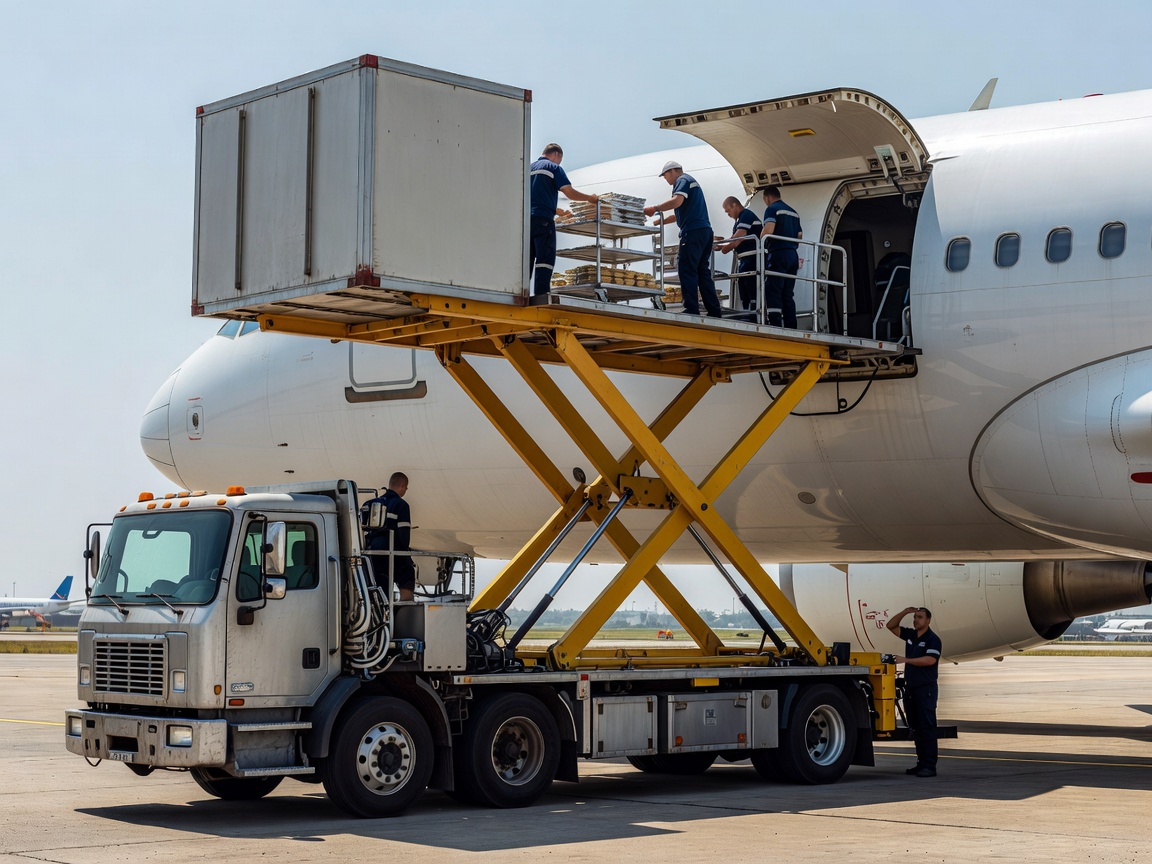
Catering High-Lifts
Catering trucks utilize modified commercial truck chassis fitted with a hydraulic scissor lift. Operators drive the box flush to the aircraft's starboard gallery doors. Built-in stabilization outriggers deploy to counter wind loads and load shifting before the box is elevated to heights of up to 5.5 meters.
Potable Water & Lavatory Units
Strict sanitation protocols dictate that potable (drinking) water and lavatory servicing equipment must never share parking zones or chassis types to prevent cross-contamination.
- Lavatory Trucks: Feature stainless steel vacuum tanks. They inject chemical blue fluid (deodorizer and anti-freeze) after safely extracting waste via sealed gravity-drop or vacuum hoses.
- Potable Water Trucks: Constructed with food-grade stainless steel, these units pump purified, chlorinated water into the aircraft's internal reservoirs via heavily filtered aviation couplers.
De-Icing Rigs
In cold climates, mobile cherry-picker units equipped with boom operators spray heated Type I (glycol-water mix for de-icing) and Type IV (thickened fluid for anti-icing) fluids. Modern rigs utilize forced-air nozzles to physically blow snow off surfaces, reducing chemical usage by up to 50%.