Heavy Duty Tractors
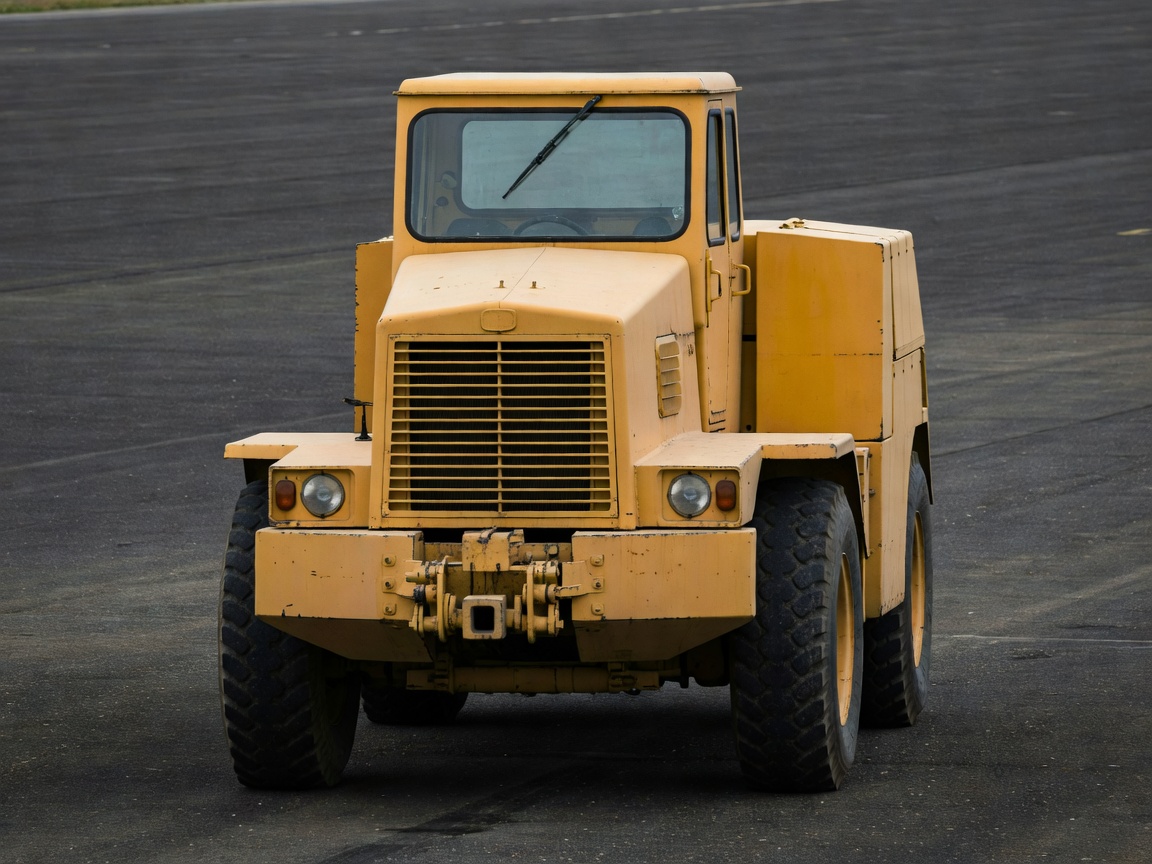
Aircraft pushback tractors are the undisputed titans of the apron. Tasked with moving inert aircraft away from terminal gates, these vehicles must generate immense torque to overcome the static friction of landing gear tires loaded with hundreds of tonnes of aircraft weight.
There are two primary architectural approaches to aircraft towing: Conventional (towbar) and Towbarless (TBL). Each demands unique hydraulic and drivetrain engineering to ensure the structural integrity of the aircraft's nose gear is never compromised.
Conventional vs. Towbarless Engineering
Conventional Tractors: Rely on sheer mass. They utilize thick steel ballast to increase tire grip on potentially wet or icy tarmacs. A shear-pin equipped towbar acts as a mechanical fuse; if torque exceeds safe limits for the aircraft nose gear, the pin snaps, disconnecting the drive force.
Towbarless Tractors (TBL): These sophisticated machines use a hydraulic cradle to embrace and lift the aircraft's nose landing gear slightly off the ground. By resting the aircraft's nose weight directly on the tractor's chassis, the TBL gains immediate traction without requiring massive built-in ballast.
Standard Tractor Classification Matrix
| Class | Drawbar Pull (kN) | Target Aircraft Types | Typical GVW (Tonnes) |
|---|---|---|---|
| Light | 45 - 90 | Regional Jets, A220, E190 | 12 - 20 |
| Medium | 100 - 200 | A320 Family, B737 | 25 - 40 |
| Heavy | 250 - 400 | A330, B787, B777 | 45 - 60 |
| Super Heavy | > 450 | A380, B747-8, An-124 | 70+ |